Sharing Huge Files with Privacy and Simplicity: Why I LOVE PairDrop
There are so many great web apps out there today that solve the "friction" problem allowing businesses and individuals to overcome hurdles without the headache of installing bulky, physical software. But as I often say: "convenience is often the enemy of security".
We still want open source. We still want privacy. And one of the specific problems we’ve been trying to solve lately, and I’d love to hear how YOU, the readers, have tackled this, is the headache of file sharing.
The Problem with the "Big" Solutions
Sharing a file on the same network? No big deal. But what happens when you need to move massive video files to people across the globe? You need it to be quick, efficient, and you don’t want a three-hour setup process.
For years, we’ve used Wormhole.app. To be fair, it’s been a bit of a hero for us at Destination Linux. When we need to move massive raw video files to our editors or each other, it’s fast and effortless. You drop a file, get a link, and you're done.
But there are two major "trust" issues that kept me up this weekend:
- It isn’t open source. I’m hesitant to trust it with truly private files because I can’t "inspect what I expect."
- The 24-hour expiration. In the world of global teams, sometimes we’re just not at our computers at the same time. If that link dies before the download starts, we’re back to square one.
You might ask: "Don't you guys have Nextcloud?" Yes, we do. But storage costs real money. When you're dealing with massive raw video files, we hit our storage caps fast, making it a non-viable "quick" solution for daily, high-volume transfers.
The Search for the "Goldilocks" App
I went down the rabbit hole this week to find a better way.
First, I stumbled across TangoShare. On the surface, it’s brilliant. It’s a simple P2P interface using WebRTC, which is arguably the most successful open-source project on the web. It has no size limits, allows rooms for up to 9 people, and claims AES-256 encryption.
The Catch? The actual application code for TangoShare isn't open source. While the protocol (WebRTC) is solid, I have no way to verify whether the encryption is implemented correctly or whether there’s a backdoor. If we’re just sharing an early cut of a video, maybe that’s fine—but if we’re moving sensitive data, that "black box" is a dealbreaker.
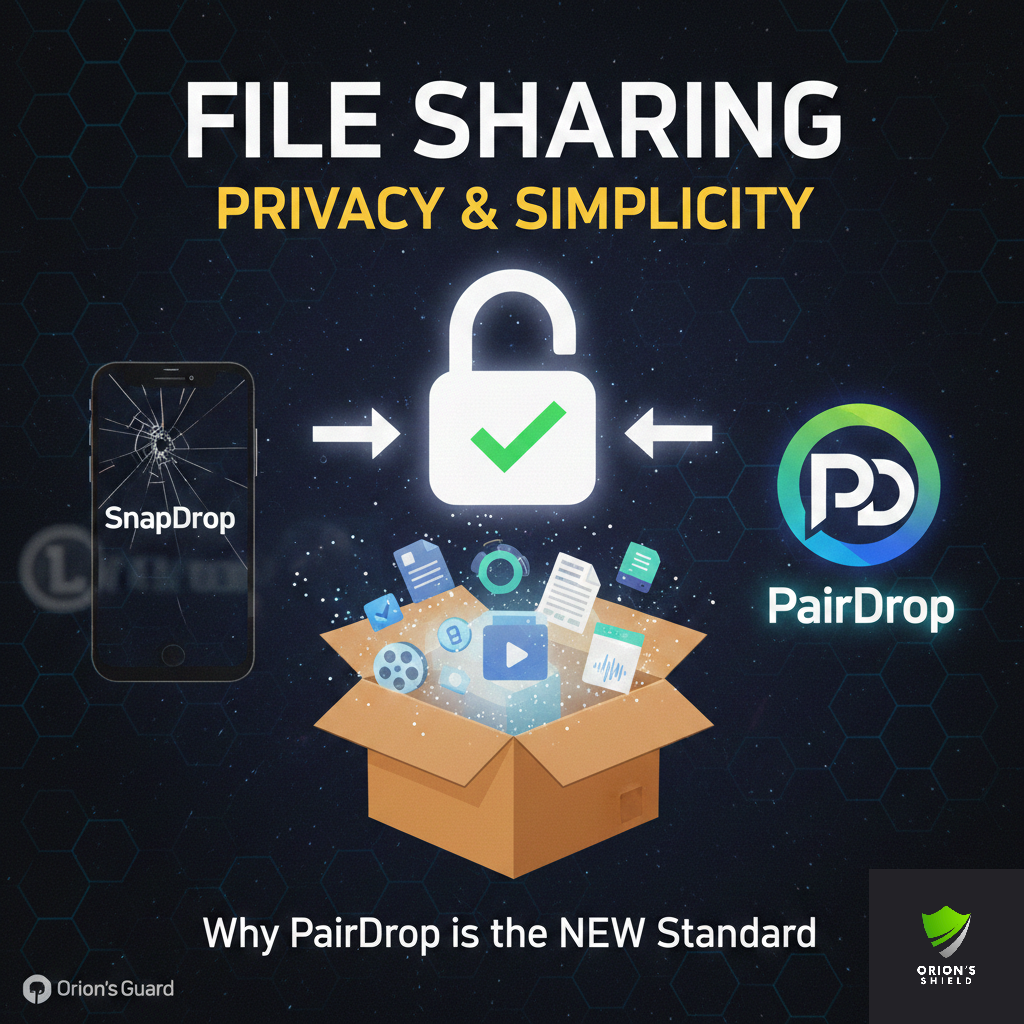
Then I checked back in on SnapDrop. I’ve liked this one for a while, but I noticed something strange: it was recently bought by LimeWire. (Talk about a blast from the past! I half expected a "low-quality-mp3" virus to pop up just for nostalgia's sake.) While SnapDrop has a GitHub presence, the live site has moved away from the original open-source spirit. It now incorporates a middleman, with LimeWire essentially hosting the files you share. It’s cool to see the brand alive, but for a privacy-first workflow? Not a chance.
The Solution: PairDrop
Finally, I found exactly what I was looking for:PairDrop.
PairDrop is a "fork" (a community-driven copy) of the original SnapDrop code. Here’s why it’s currently sitting at the top of my bookmarks:
- 100% Open Source: It carries a GPL license, meaning the code is transparent, auditable, and community-maintained. I can finally see what’s happening under the hood.
- True P2P Philosophy: It sticks to the "no-server" rule. Your files don't sit on a corporate hard drive in a data center; they move directly from your device to the recipient.
- Public Rooms: Unlike the original local-only tools, PairDrop allows you to create a "Public Room" to share files over the internet while maintaining that P2P security.
- The "Convenience" Factor: It handles iOS support beautifully and includes a QR code setup that makes moving files between your own devices on the same network a total breeze.
Why It Matters
In a world where "free" services usually mean you are the product, PairDrop is a breath of fresh air. It gives us the speed of a web app with the security of an encrypted, peer-to-peer connection.
If you’re looking to move big files without sacrificing your privacy—or your wallet—PairDrop is the tool I’m putting my weight behind. It’s the best way to ensure that the only people seeing your data are the ones you intended.
What are you using to move your "big data" these days? Are you sticking with the big names, or have you found an open-source gem we missed? Let us know in the comments!